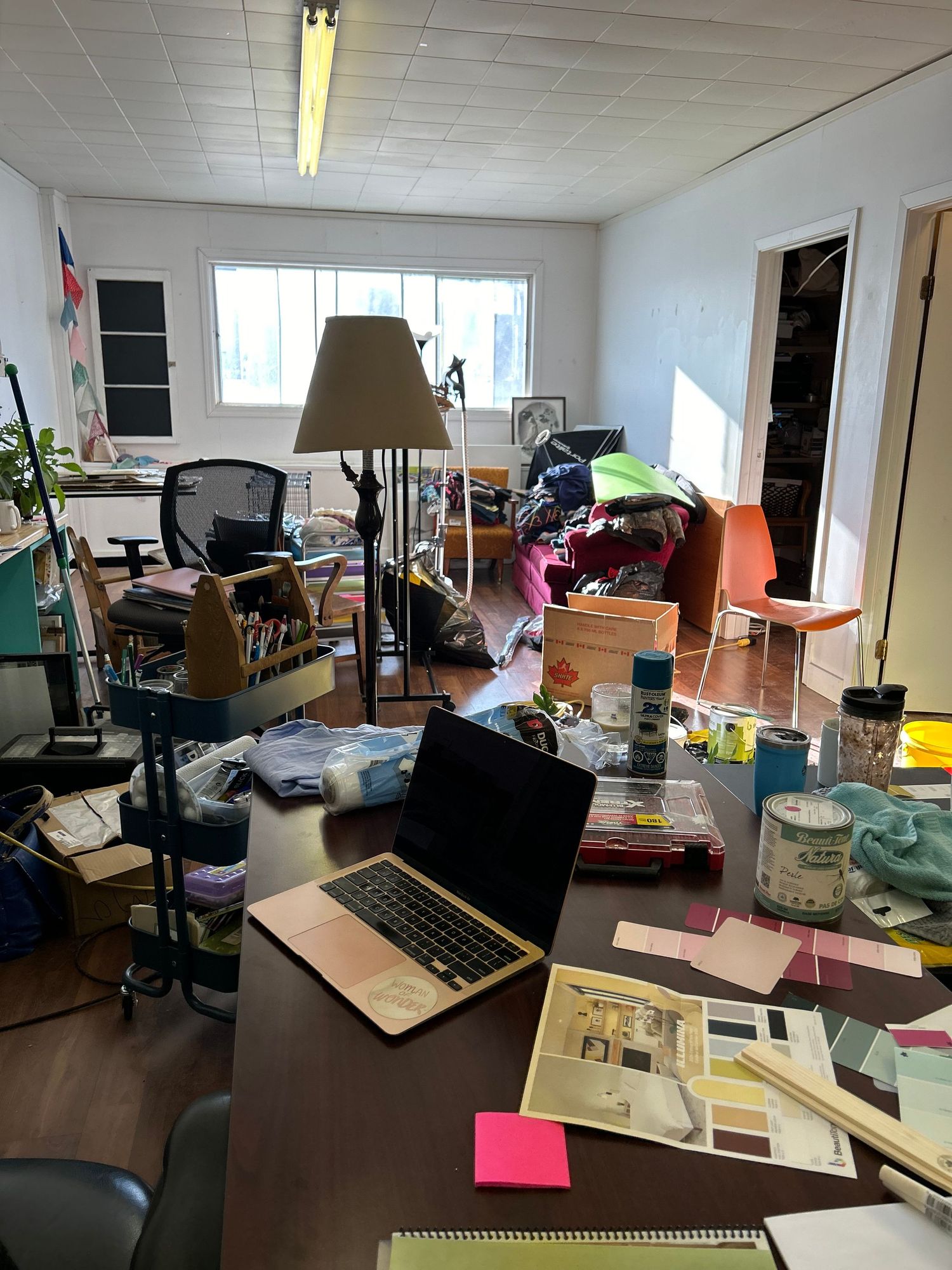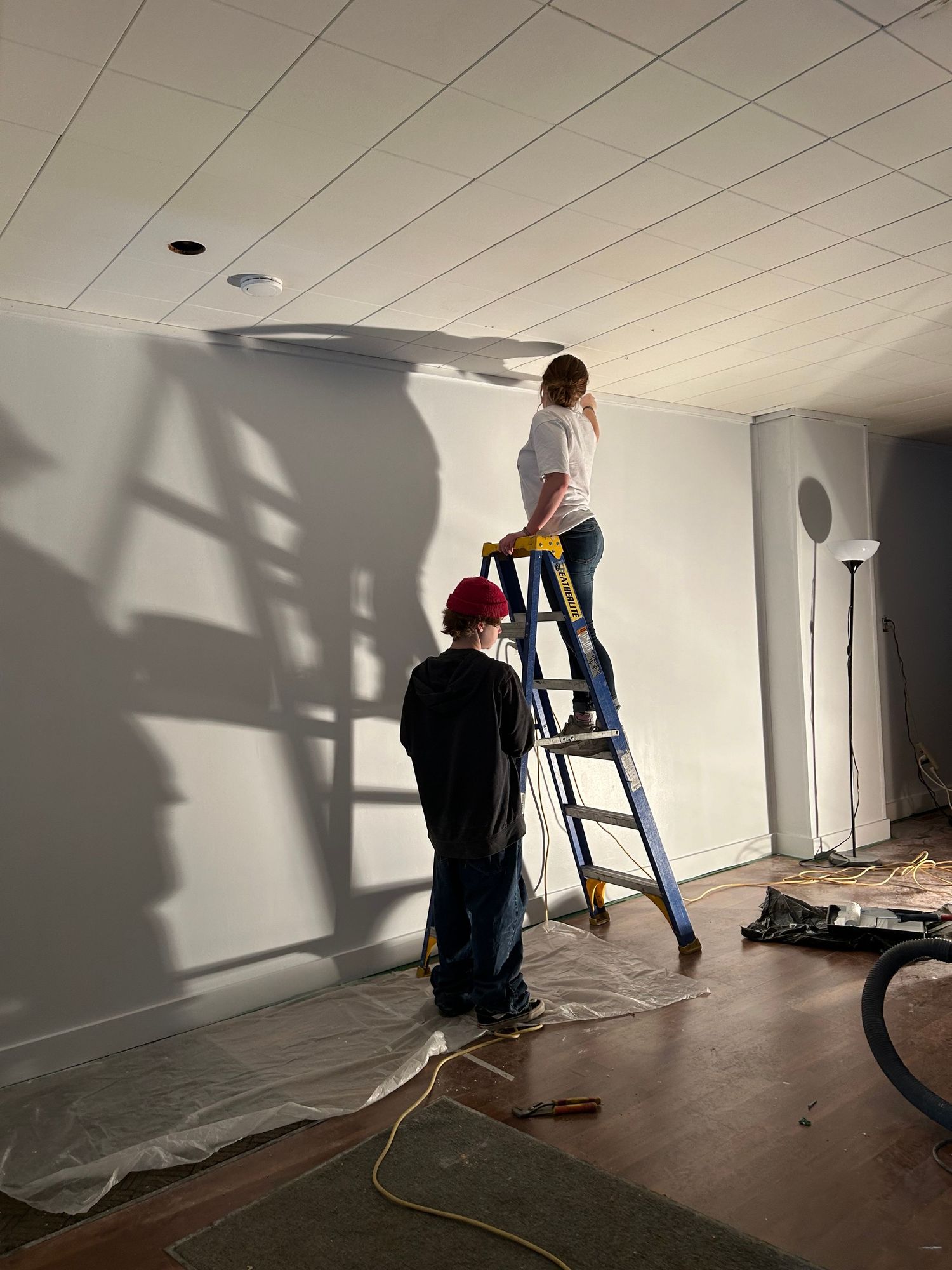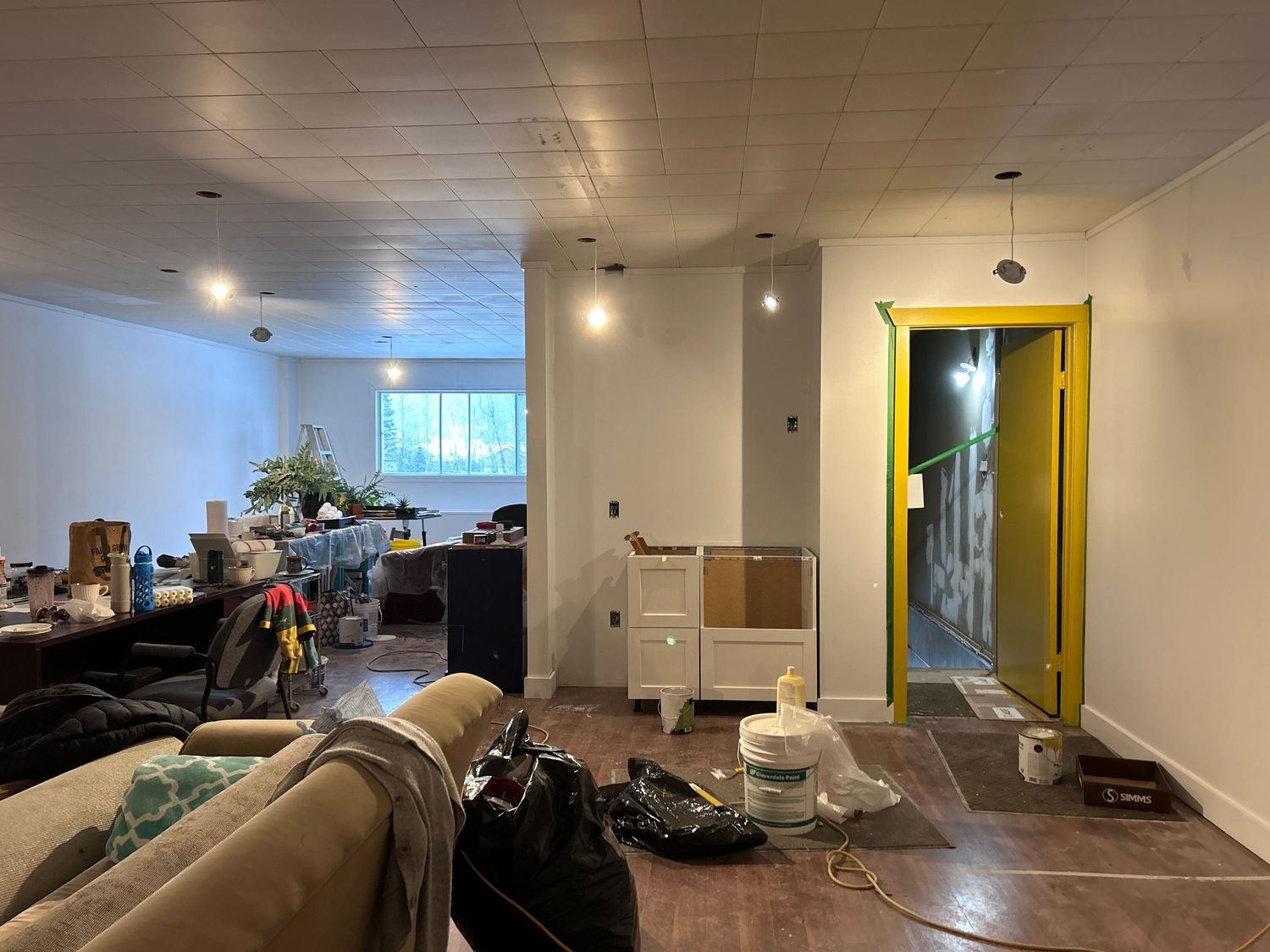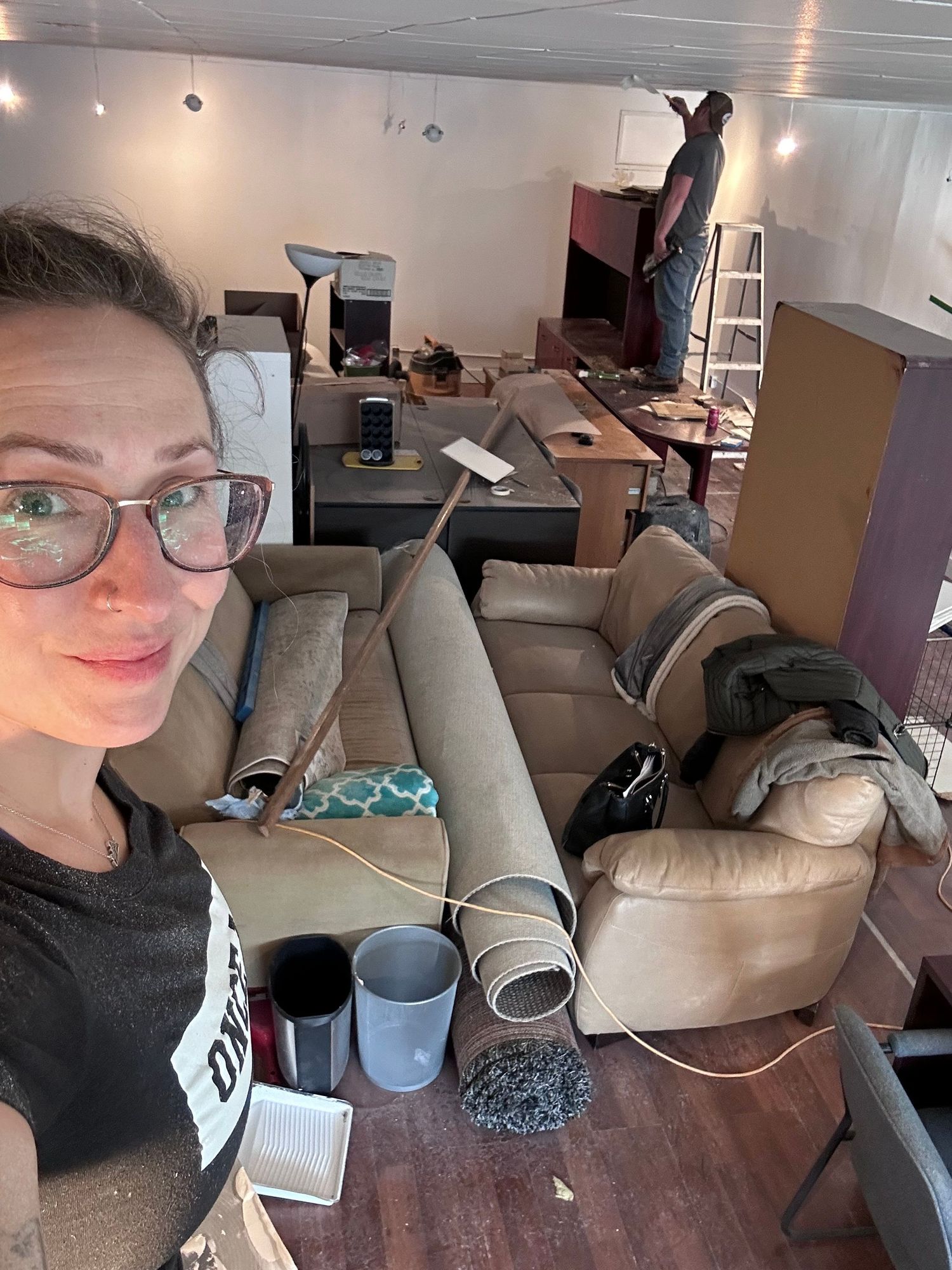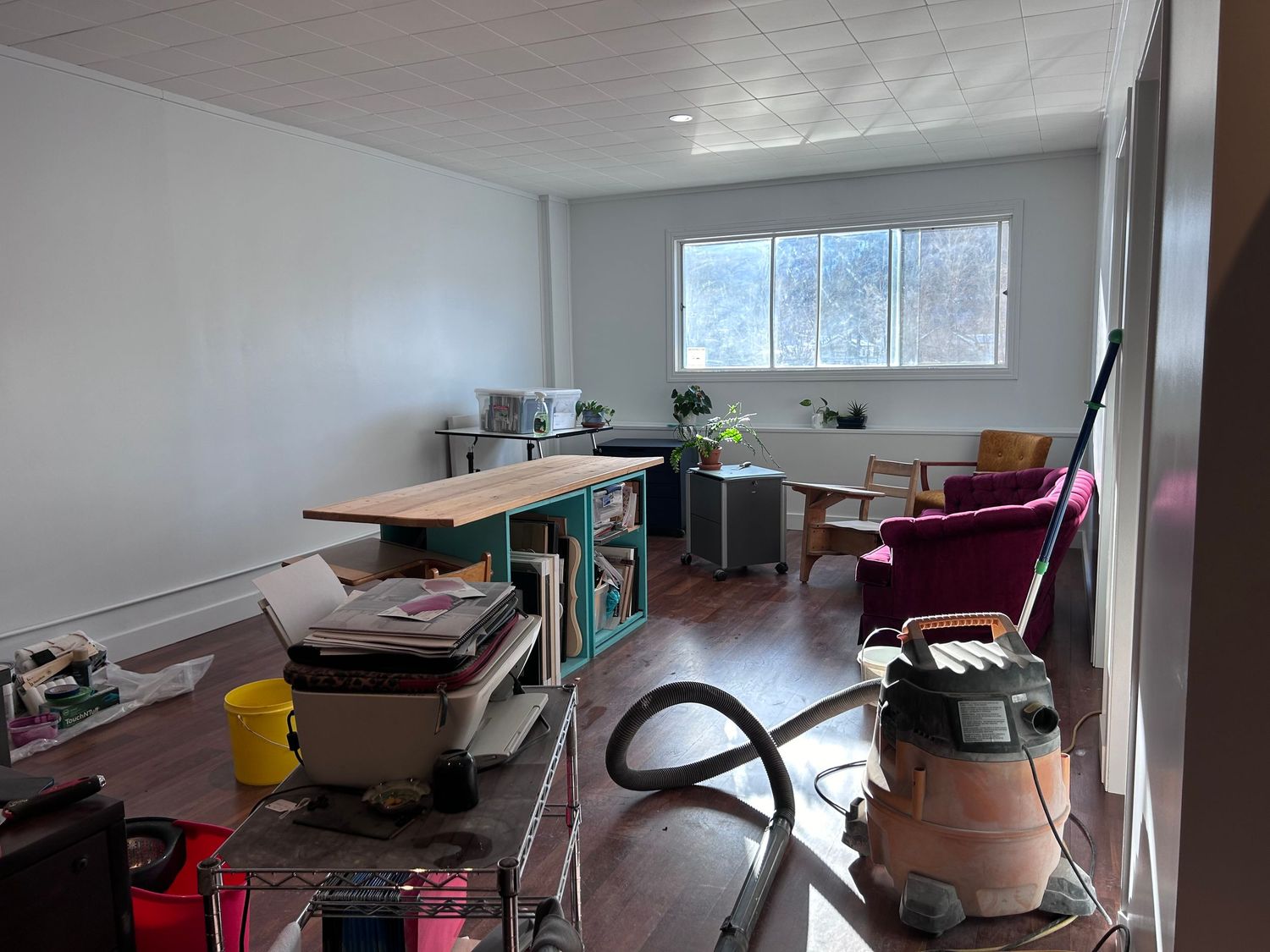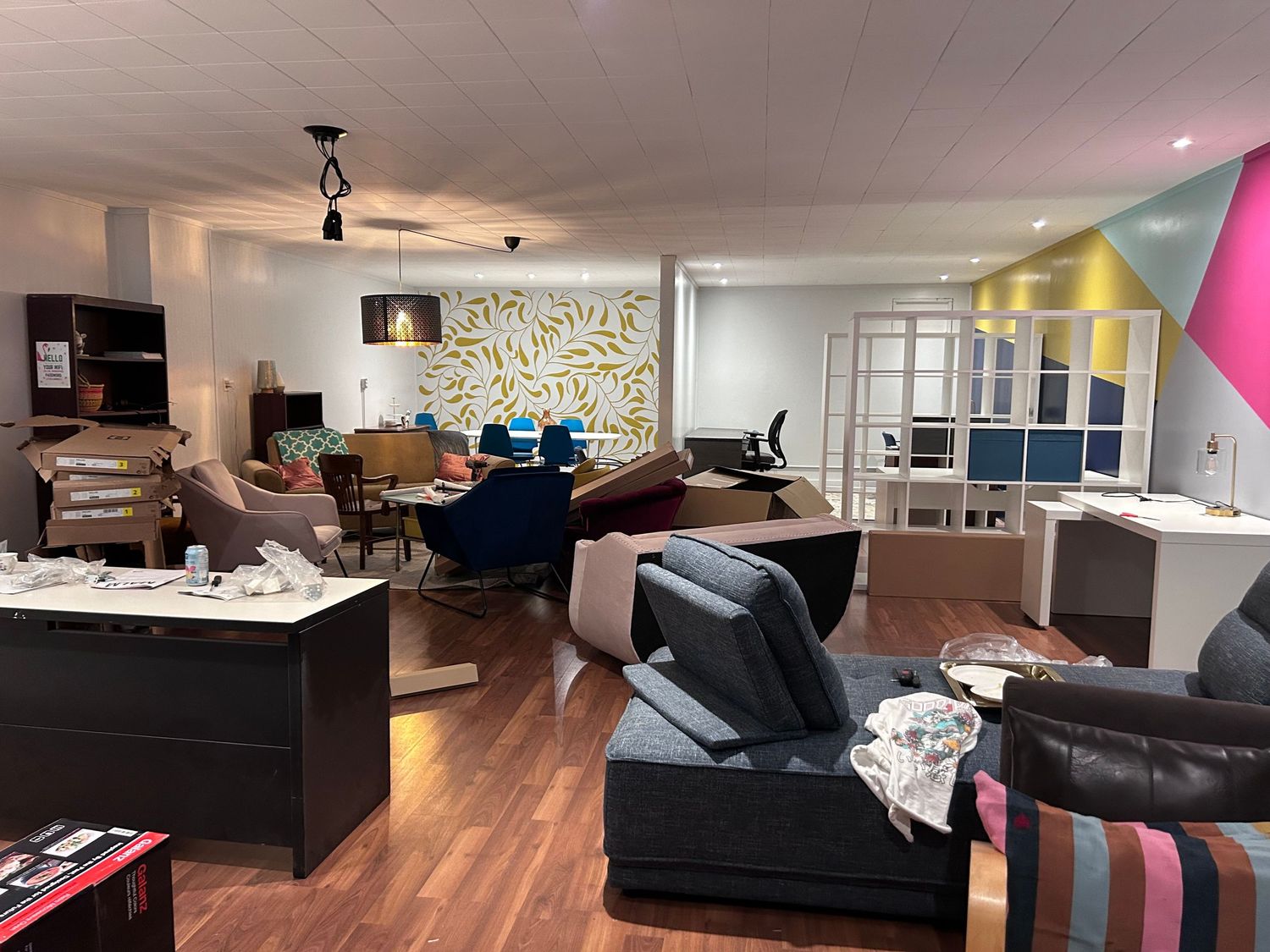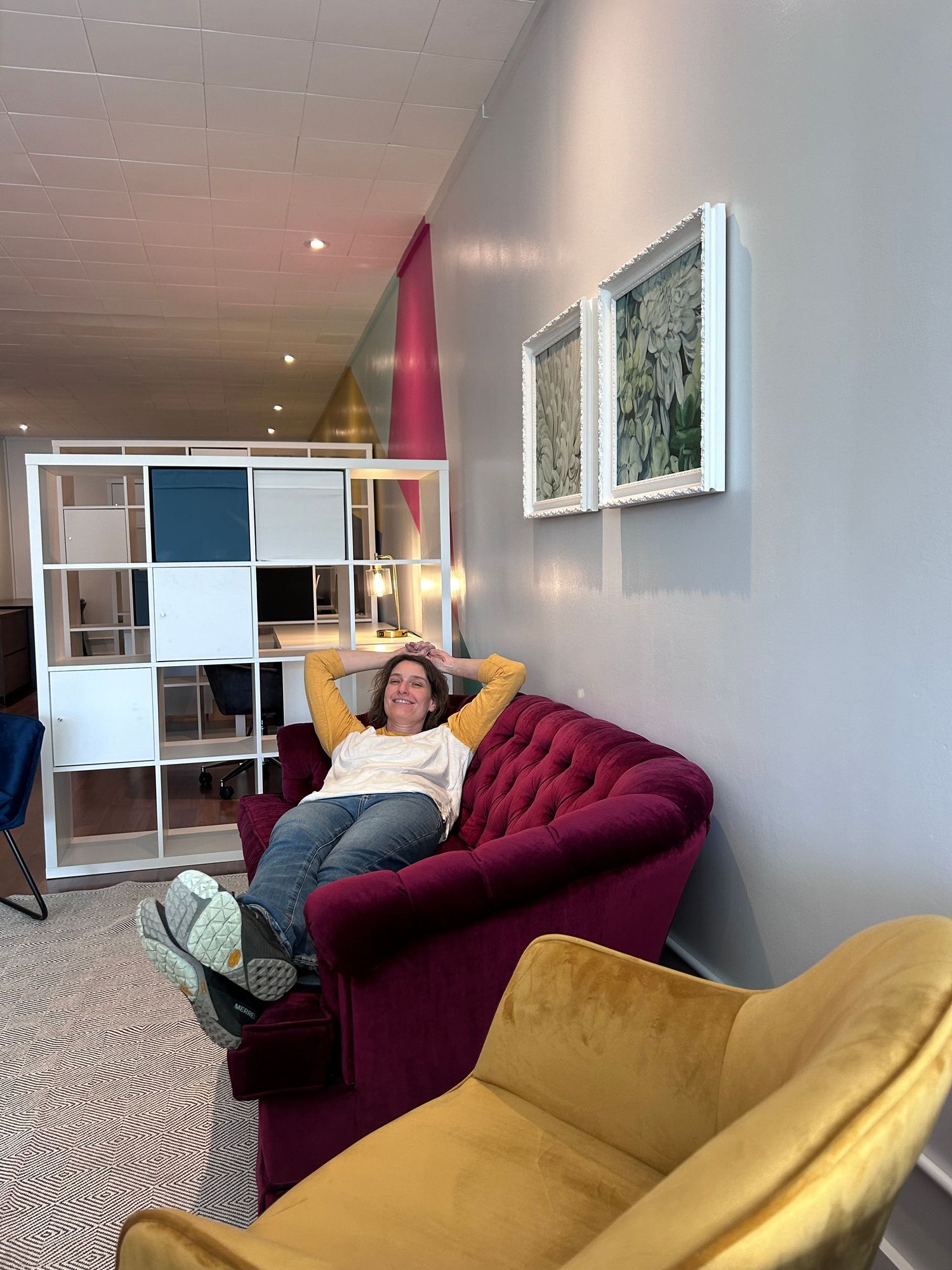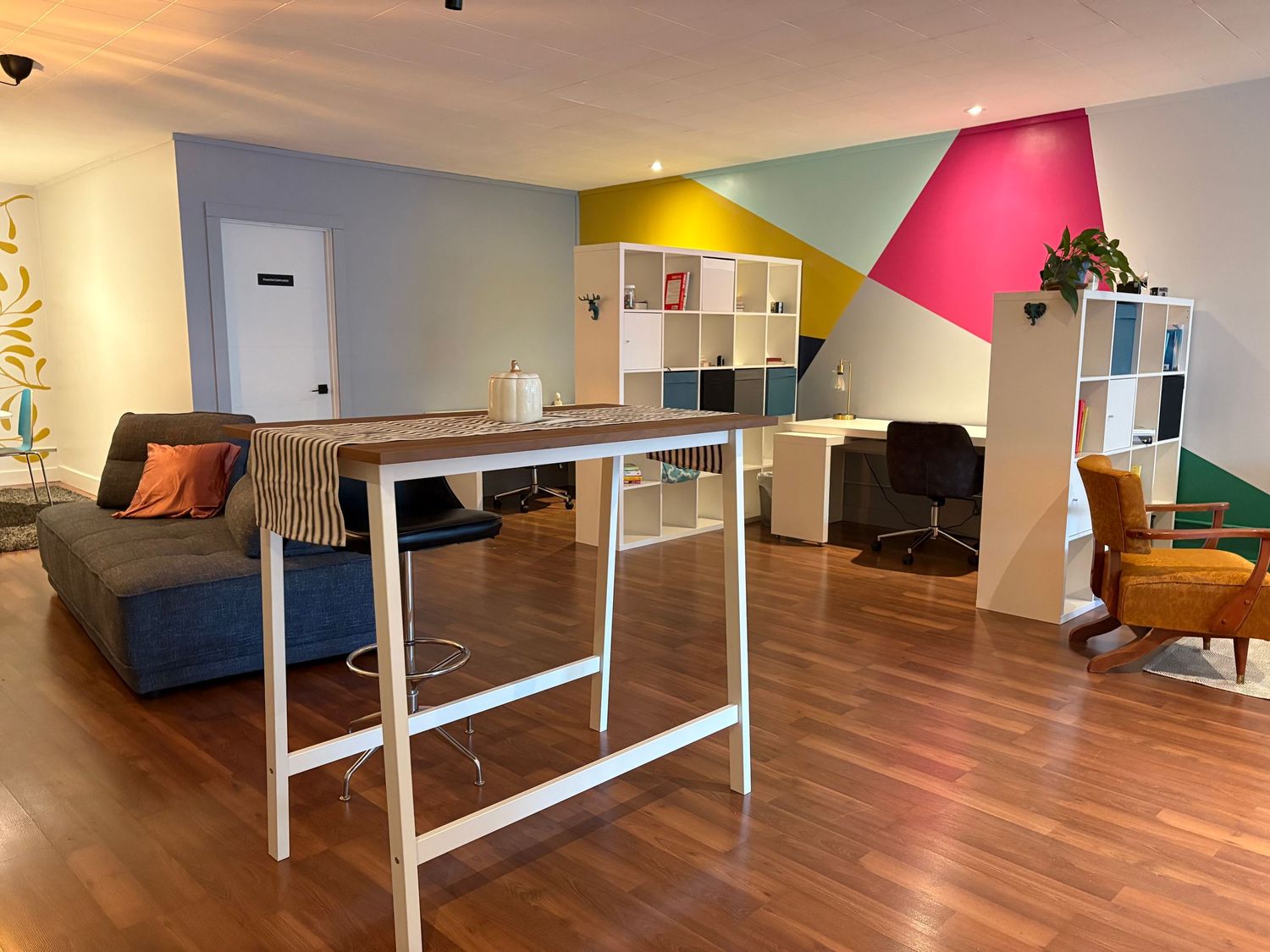
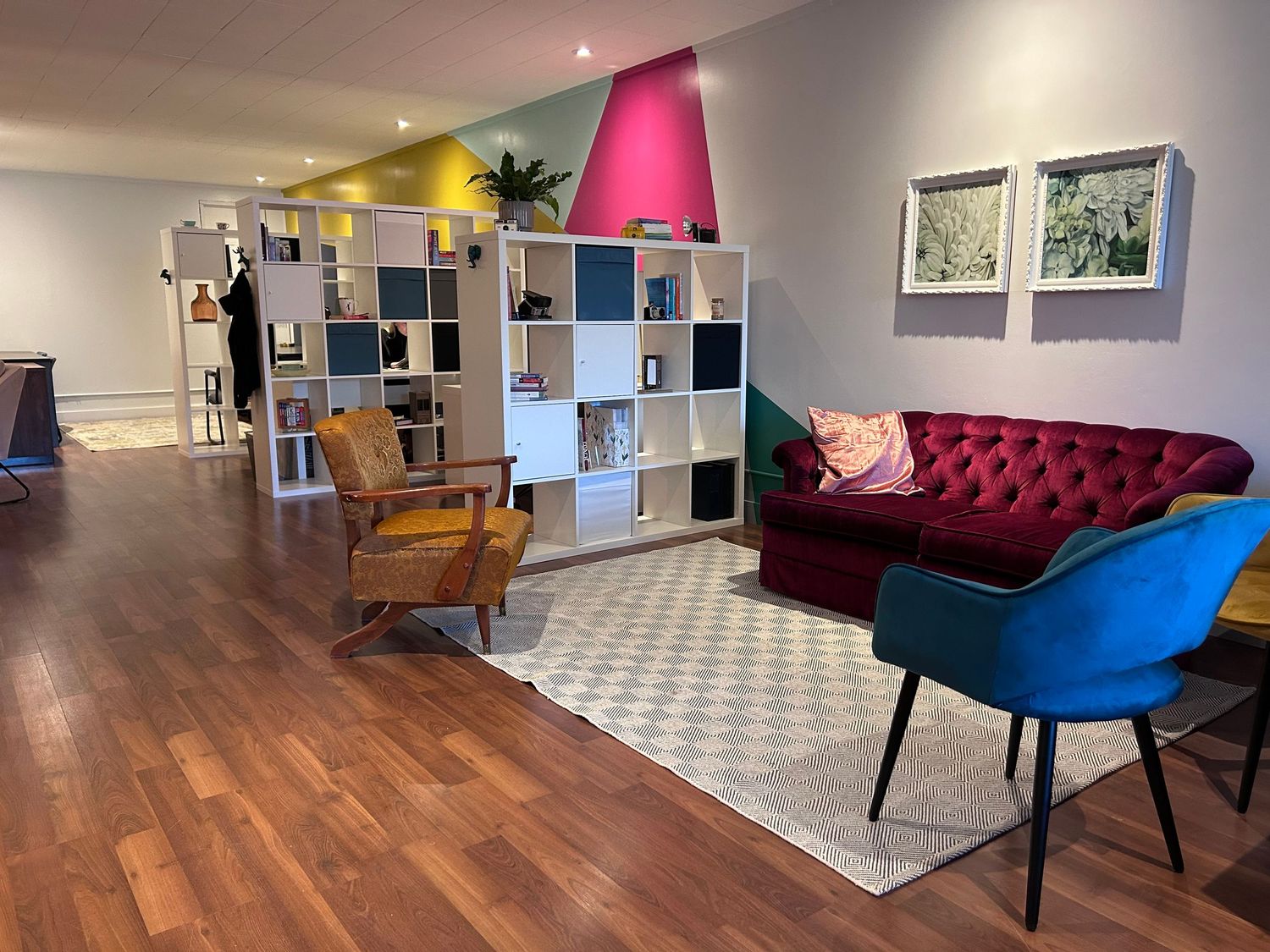
CO.LAB has nearly 1,000 square feet of space tucked into an old building in downtown Crowsnest Pass. Designing the layout was our first step—and quickly, we realized this wasn’t going to be a light refresh.
This was a full transformation.
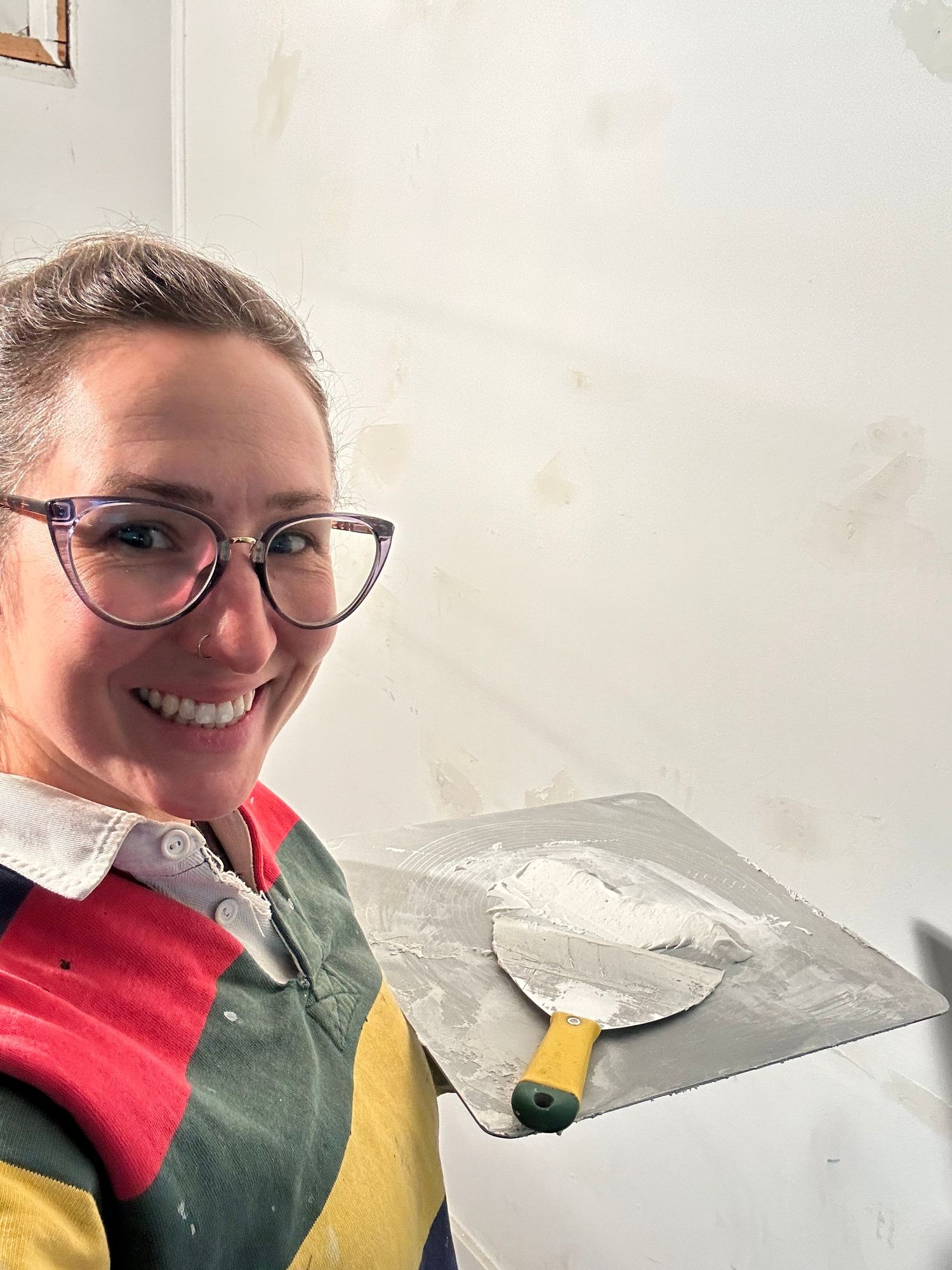
The space had been untouched for years. Layers of drywall, outdated finishes, and—just believe us when we say—a lot of drywall mud. We knew the office below us had exposed brick hidden behind their walls, and we seriously considered chasing that same character. But reality set in quickly: uncovering brick would also mean reworking flooring and ceilings around the entire perimeter. It was one of those decisions where, if everything else had been worse, we would have gone all in. But with limited budget and time, we chose to focus on impact over perfection.
So we leaned into what we could control.
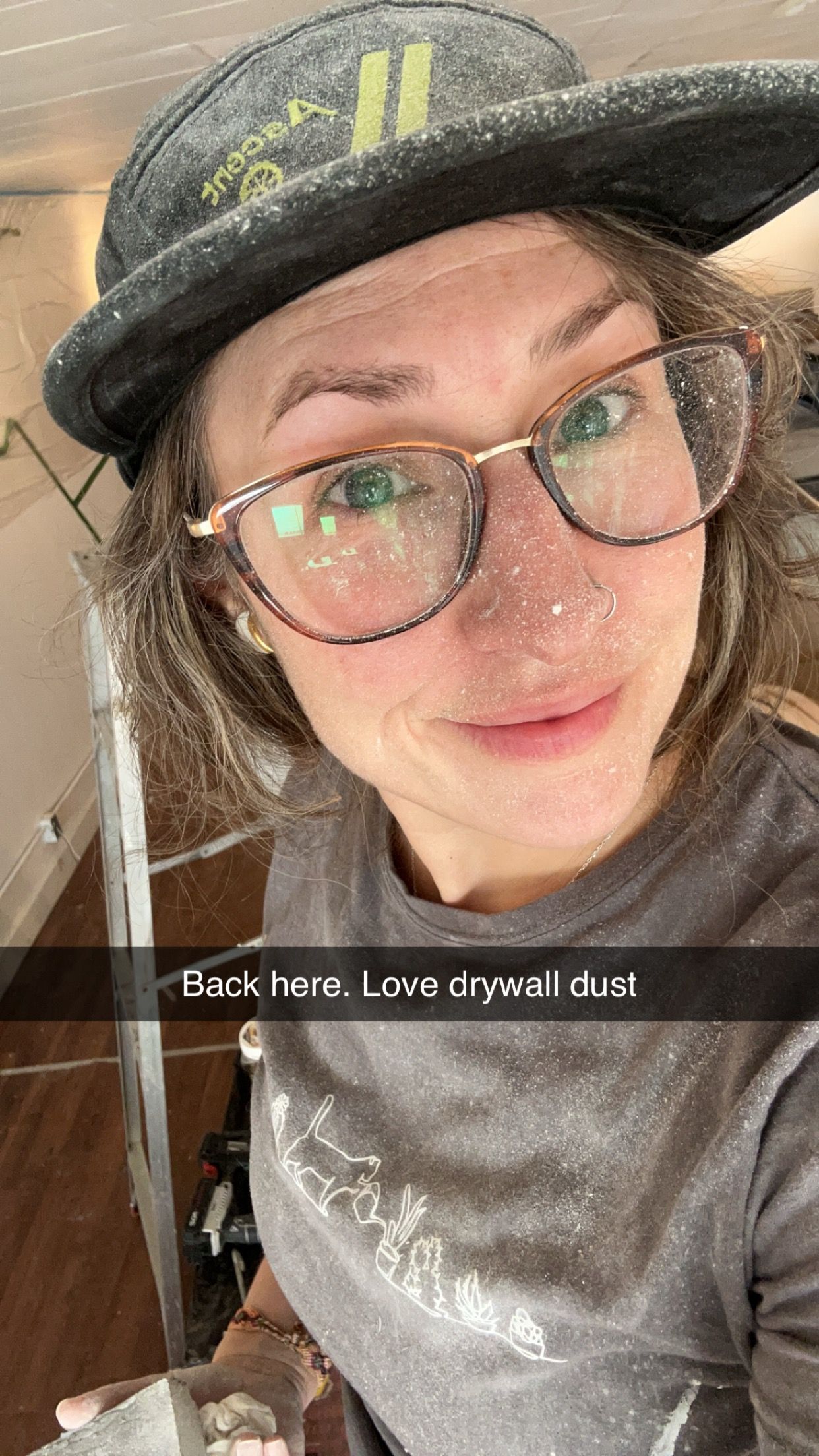
And somewhere along the way, Troi became very, very good at drywall mud.
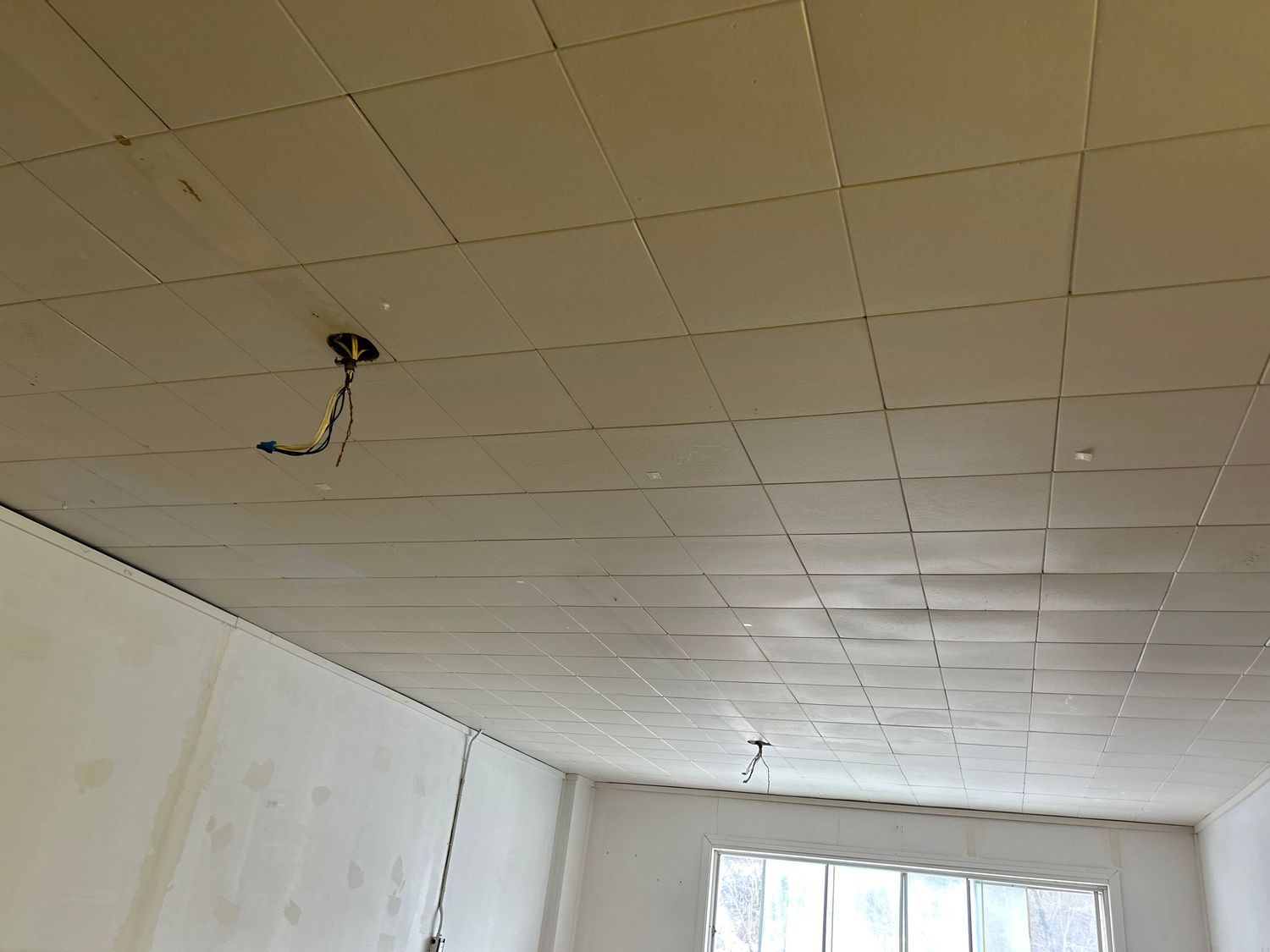
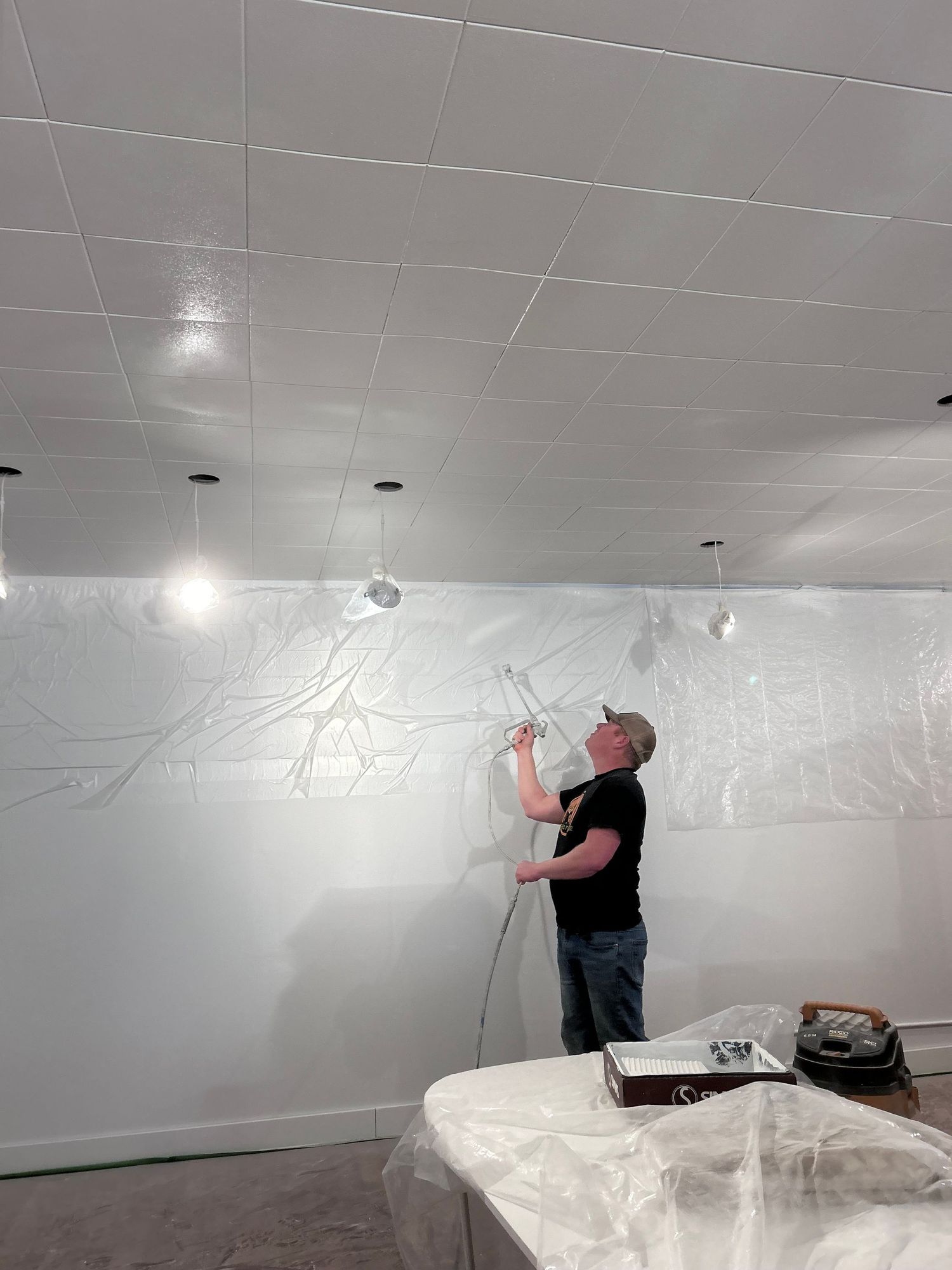
The ceiling was another challenge entirely. Harsh fluorescent strip lighting ran across the entire space, with exposed electrical wires stretching along the walls and overhead. It felt more industrial storage than collaborative workspace. Our first call was to an electrician—non-negotiable. Cleaning up the electrical and rethinking the lighting completely changed how the space felt before we even touched furniture or decor.
From there, things started to take shape.
We wanted CO.LAB to feel welcoming, functional, and just elevated enough that people felt good walking in—but not so designed that it felt untouchable. A space you could work in, meet in, and actually use.
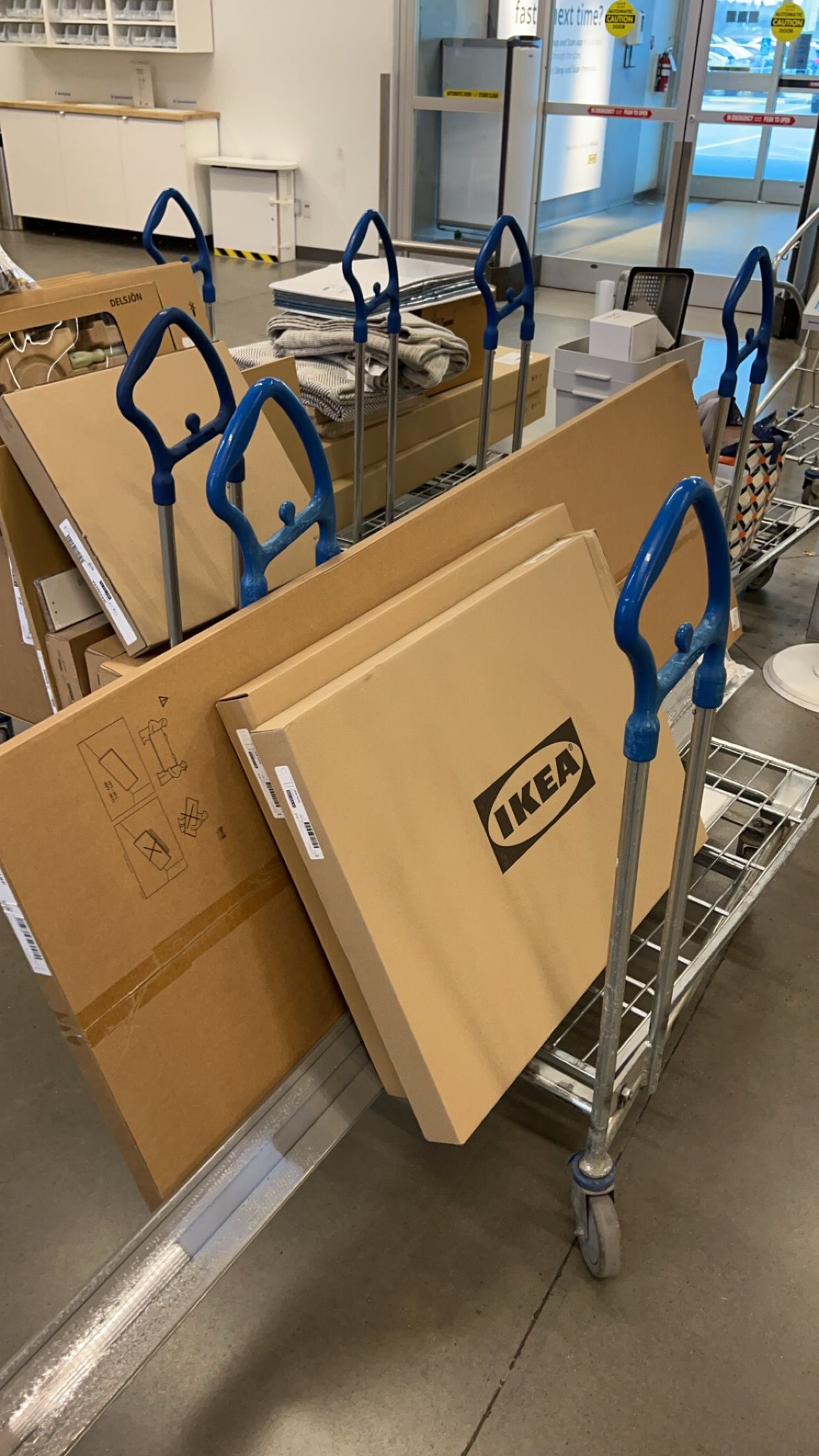
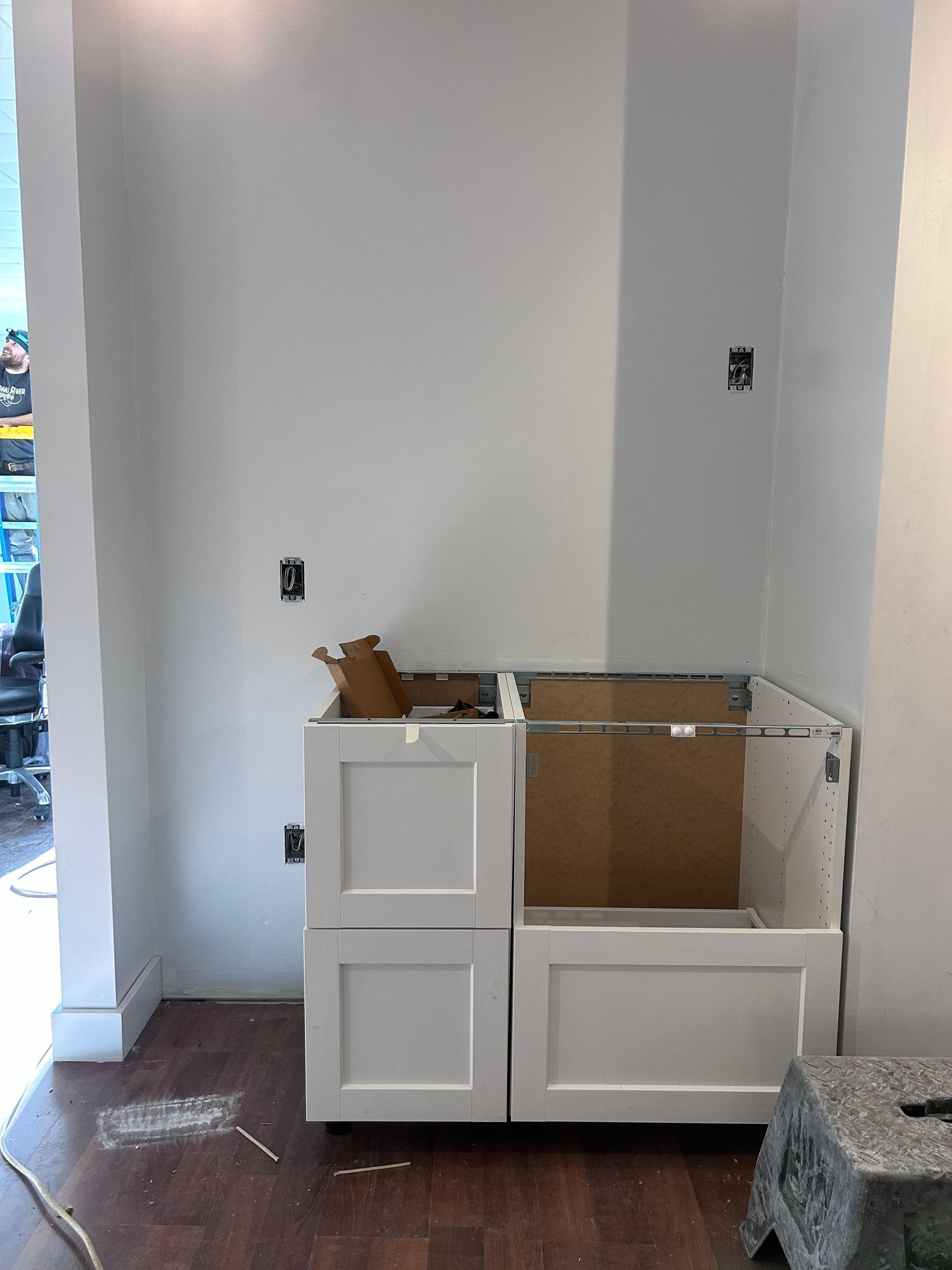
A friend from Earth and Abode helped us design a simple, beautiful IKEA kitchen for the main area. It became one of those anchor pieces—practical, clean, and quietly pulling the whole space together. From there, every decision followed the same filter: does it add function, warmth, or flexibility?
Because that’s what CO.LAB needed to be.
Not just a workspace—but a place people could land, focus, connect, and build something of their own.
Looking back, the process wasn’t glamorous. It was long days, messy work, constant decision-making, and figuring things out as we went. But that’s also what makes the space what it is.
It wasn’t designed in theory.
It was built in real time—for real people.